
Mastering the Teeter-Totter: Elevate Your Motorcycle Skills
Aug 01, 2023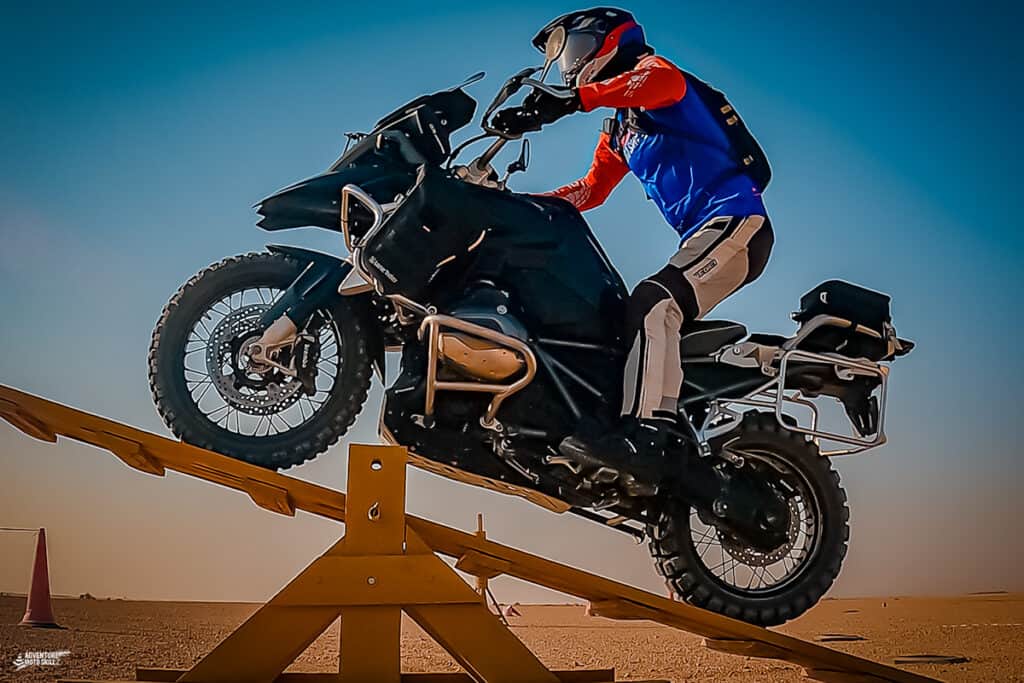
By Coach Mike, ADVMotoSkillZ
The teeter-totter is an exciting and sometimes challenging obstacle. It is often found at off-road motorcycle training centers and on many riders’ bucket lists. This training exercise is designed to help fine-tune your skills in clutch control and brake application, as well as enhance your balance and overall control on the motorcycle.
In its simplest terms, a teeter-totter is a board that is placed on a fulcrum. Motorcyclists ride up the plank and down the other side as it pivots over the fulcrum.
Watch: riding a teeter-totter step by step
While there are many variations in teeter-totter designs from short and steep to long and narrow, one thing they all have in common is the excitement (and, yes, sometimes fear) they instill as you ride up and over them. In this blog post, we will break down the steps and techniques needed to safely navigate this fun riding obstacle with finesse.
This post may contain affiliate links. Please see our Privacy & Disclosure Policy for more details.

Top-quality gear for your next adventure
Used and recommended by ADVMotoSkillZ
Visit Lone Rider Here
How can the Teeter-Totter help motorcycle riders’ skills?
Different designs in teeter-totter construction help riders focus on different skills development.
- Teeter-totters that are narrow emphasize the rider to focus on line selection and balance.
- Teeter-totters that are steep and short (tend to have a wider plank) are designed for momentum control.
As a side note, a seesaw is a child’s toy (designed in a similar fashion) that they sit on and swing up and down. Motorcycles ride teeter-totters!
Safety considerations during Teeter Totter riding
There is a risk element of “teetering” and then possibly “tottering” off the side of the obstacle, if not ridden correctly. So ensure that you and your bike are wearing all of the appropriate safety gear before attempting. We have a great article reviewing all the gear all the time here and urge you to check it out and properly prepare.
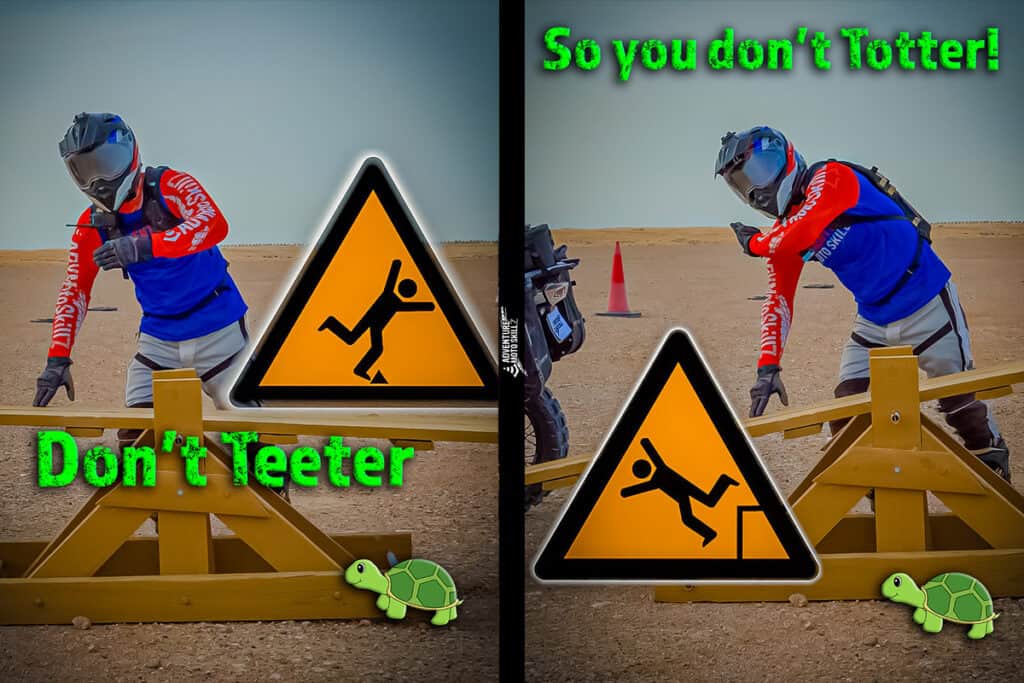
If you will be attempting a taller or steeper teeter-totter be sure to check your bike’s suspension. The bike is going to compress and rebound quickly as we ride up and over the fulcrum position of the teeter-totter.
Having enough damping to absorb the initial impact of the ramp is crucial. However, if the suspension is set too soft, it can lead to an abrupt rebound during the transition to the down portion. This sharp bounce back can feel like a pogo stick and possibly launch you off the bike.
Learning to Ride the Teeter Totter
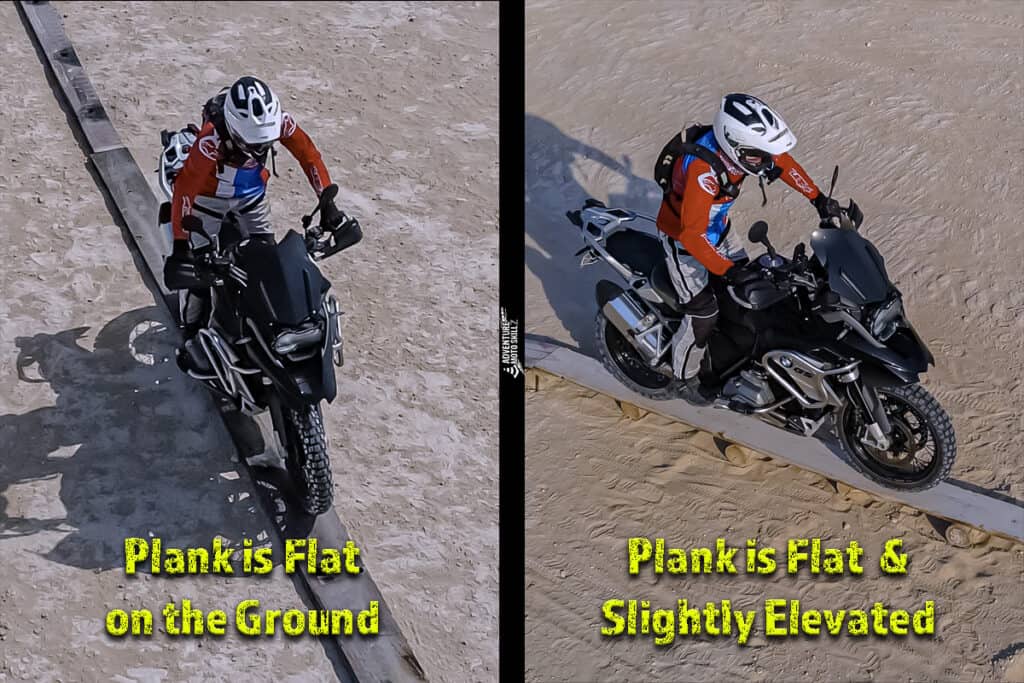
Before attempting your first teeter-totter, start training by riding along a flat plank that is on the ground. This drill ensures you have the balance and ability to steer the bike straight over the plank before getting on one that is elevated. Dialing in your flat plank skills can really help to develop the confidence needed to go to the next step.
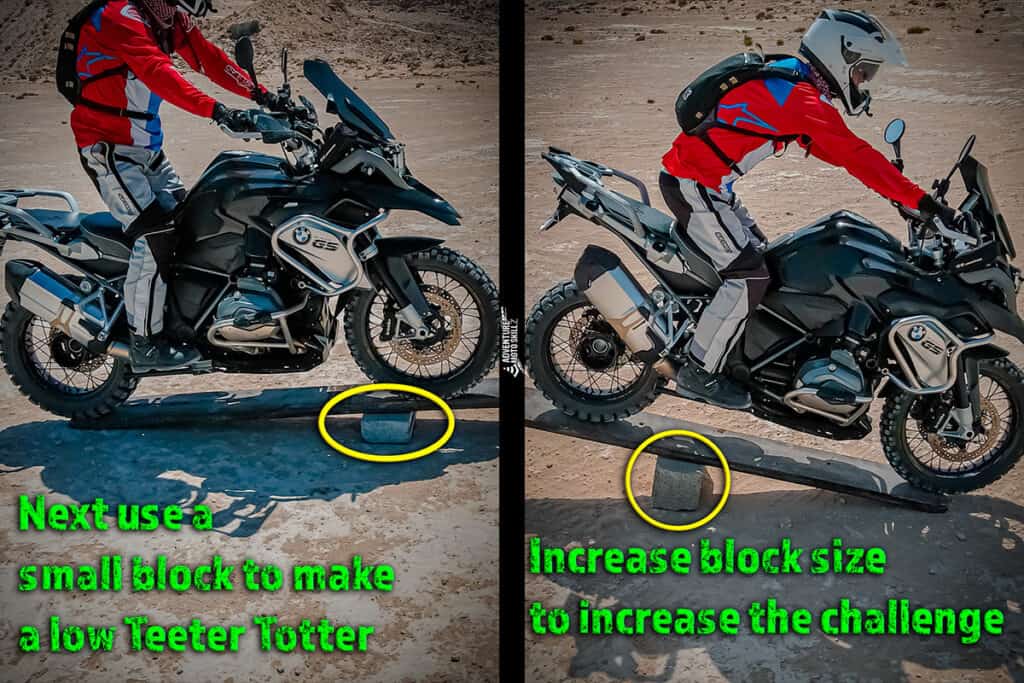
When you are comfortable, it is time to up the challenge. Start small and low to begin. A thick, sturdy plank placed on a concrete block serves as an ideal miniature teeter-totter to practice and familiarize yourself with the dynamics involved. With experience and practice, you can continue on with more advanced teeter-totters.
Momentum is key to a successful Teeter Totter
Successfully riding the teeter-totter relies upon having the correct amount of momentum to go up and over the obstacle as smoothly as possible. If the bike scrubs off too much speed on its way upward, it can put you in a tricky situation. As the bike slows, so does the movement of the plank pivoting over the fulcrum. The combination of these two momentum losses can result in a tip-over.
First gear typically supports the best throttle response to correct for a loss of momentum. Quickly twisting on the throttle and engaging the torque of first gear can often correct the misjudged approach speed. Just be sure to not overdo it and launch yourself into an unexpected jump.
The opposite momentum problem is having too much speed as the front tire hits the plank. Quickly pulling in the clutch is an efficient way to resolve this issue. Disengagement of the engine’s power to the rear wheel, in combination with gravity pulling on the bike as it is going up the incline, will result in slowing the bike’s momentum.
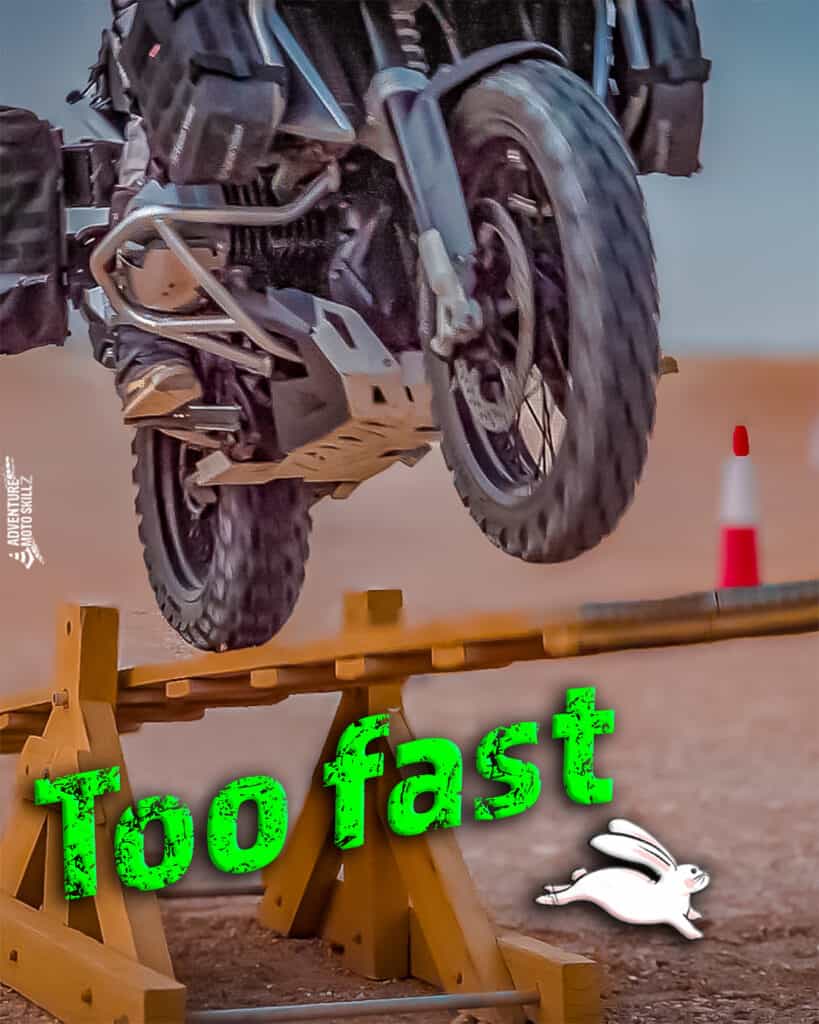
One benefit of slowing the bike with the clutch is the bike’s suspension will not be upset. The last thing you want to experience while balancing on an elevated plank is the bike’s suspension diving and rebounding due to an aggressive application of brakes. If needed, a gentle tap of the rear brake can scrub the remaining speed.
The ideal teeter-totter approach speed is fast enough that you can ride up the incline of the plank, and then transition to the backside with full control. This will become easier to judge with each successive pass.

Innovative Motorcycle Tool Sets – Compact & Reliable
Used and recommended by ADVMotoSkillZ
Visit SBVTools Here
Body Position for Teeter Totter Riding
Standing rider posture will provide you with several advantages when riding this obstacle. By being active with our bodies, we can assist the bike through the transitions it will quickly undergo as we ride up and over the plank.
Ankles
Holding the bike from the ankles to the knees is paramount. This creates a strong connection that allows for effective balance and maneuverability. Strong lower leg grip allows for agility and lightness on the handlebars.
Hips
Hips will shift slightly forward as the bike climbs the teeter-totter, similar to uphill riding posture. As the bike reaches the fulcrum, the plank will be flat momentarily before tipping downward. At this point, we gently transition the hips rearward, similar to downhill riding position.
Knees
As the bike travels from the ground to the plank, it is important to allow the knees to assist the bike’s suspension. By absorbing some of the compression with your body it creates a smoother ride. The knees will be active during the landing on the downside as the suspension rebounds.
Vision
Use target fixation to your advantage by looking where you want to go. Upon teeter-totter approach, lock your eyes at the base of the ramp where it is sitting on the ground. As soon as the front tire reaches the base, scan the length of the plank and immediately shift your gaze up into the distance.
The teeter-totter is an excellent tool to sharpen quick responses, making you a more adept rider. By breaking down the process into individual steps and practicing each one, you build confidence to navigate the teeter-totter and similar obstacles smoothly.
In essence, the teeter-totter is a test of your agility, balance, and control on your motorcycle. It offers a tangible way to put your riding skills into practice and enhance them. However, it requires a firm grasp of riding fundamentals. It is a fun and rewarding challenge that can build confidence and contribute to your growth as a rider. So, gear up, stay safe, and ride the teeter-totter!
Want feedback on your teeter-totter technique?
Film your plank or teeter-totter runs and send them to me through ADVMotoSkillZ Video Coaching. I’ll look at your approach speed, clutch control and body position and help you ride it with more confidence. Based in the UAE? Book in-person off-road coaching instead.
Originally published 1 August 2023 by Coach Mike, ADVMotoSkillZ.
Author


